
7 min read
The art of managing schedules
Managing a project schedule is a fundamental skill to ensure that projects are completed on time and within budget...

See how this step can guarantee the success of your projects
Managing a project schedule is a fundamental skill to ensure that projects are completed on time and within budget. It involves setting tasks, allocating resources, and monitoring progress to ensure that everything is going as planned. That’s why it’s so important to master the art of managing schedules to ensure the success of a project.
On a daily basis, this management can be compared to planning a vacation trip: you define the destination (project objective), create an itinerary (schedule), book flights and accommodations (resource allocation) and, during the trip, adjust the itinerary as necessary to ensure that everything goes well (monitoring and control).
For example, imagine that you are organizing a corporate event. You need to set the event date and create a to-do list, such as choosing the venue, hiring a vendor, and sending out invitations. Each of these tasks has a specific deadline and is assigned to different team members. During planning, you monitor progress, ensuring that vendors are paid on time and that guests confirm their presence. If an unforeseen event arises, such as the need to change the location of the event, you adjust the schedule to ensure that the event still goes smoothly.
Managing a project schedule is a journey where thorough preparation and constant adjustments are essential to ensure success.
Project schedule management
Management includes monitoring each stage of the project, such as planning, development, control, and calendar monitoring. This will ensure that tasks and activities are completed on time.
By carrying out effective schedule management, you can overcome any type of setback that your project may generate, making the necessary adjustments to ensure a perfect experience.
What is a project schedule?
One of the key tools for keeping a project organized is a schedule. We can compare it to a detailed timeline that describes the tasks, activities, and milestones necessary to complete a project. In addition, he is responsible for assisting in the planning, monitoring, and management of resources and activities that will ensure that the project is delivered on time.
Project schedules are usually presented in the form of a Gantt chart, but they can also be viewed in several other formats.
Step by step to create a project schedule
1. Defining the scope of the project
The project scope is a detailed list containing all deliverables, tasks, technical requirements, and customer expectations. In addition, it is not possible to start creating a project schedule without knowing exactly what the project involves, so it will be impossible to calculate how long it will take.
2.Assemble a to-do list
At this stage, you need to divide the project into smaller tasks that can be assigned to the team. This list can be put together in a project management software, so you will be able to simplify this process as much as possible.
3.Recognize the dependencies between tasks
Dependencies are the logical relationships between tasks. For example, imagine that you are planning a large construction. For it to occur, it will be necessary to excavate the place where you want to build before building the foundation. Therefore, the task “to make the foundation” depends on the completion of the task “excavating the site”. This is a dependency between tasks and for everything to go well you need to take these points into account when creating your project schedule.
4. Establish project milestones
In most projects, it’s interesting to add checkpoints along the way to the deadline. This will help identify and resolve any delays quickly.
5. Distribute tasks
Distribute the to-do list among the project team. Remember to take into account the individual abilities and abilities of each team member.
6.Track and evaluate the schedule
Now that your schedule is set, it’s essential to keep track of progress. That’s because when it comes to project management, it’s always good to prepare for the unexpected.
Why is schedule management so important?
Did you know that 40% of projects do not have consistent planning, even though this is the third most important process in project management?
Schedule management is responsible for helping to maintain control throughout the project lifecycle, in addition to avoiding potential problems. In addition, programming helps in identifying dependencies. Without them, you can’t prioritize activities in the correct order, for example.
Learn what are the main components of managing a project schedule
Remember that each project is unique, but your schedule management process will likely include:
- Definition of activities: Determine what tasks and activities will be necessary to complete your project. First, you will need to understand the objectives and scope of the project.
- Activity sequencing: understand which activities can be performed at the same time, which of them must be performed in a specific order, and which depend on other tasks that need to be performed first.
- Estimated activity duration: estimate the time it will take to complete each of these tasks. If you have data from previous projects, excellent. If not, you may need to use your expert judgment.
- Development of the schedule: create a new project schedule that includes everything that will be carried out, the order in which it will be done, and the time that each of the steps will take.
- Schedule monitoring: track your project’s progress against the schedule baseline and compare what’s happening with what you expected.
- Change management: ensure that all schedule modifications are reviewed, approved, and communicated to the project team and stakeholders.
Learn the main methodologies for creating a project schedule management plan
When developing a project schedule management plan, you will need to organize all project activities in sequence, in addition to having an estimate of how long each of them will take. It’s important for you to know that defining a solid project schedule can be a bit complex, especially if your project is large, with many dependencies.
Learn about the main methods that can be used:
Critical Path Method (CPM)
This is a programming methodology that helps you determine the most efficient path for your project, that is, it is a solid way to understand the logic behind the tasks and calculate their duration.
For this method, create a list of all the activities involved in the project. Then, determine the sequence of activities considering all critical dependencies associated with the project. Using this sequence, draw the “network diagram” that will be a graphic representation of your project’s workflow. Finally, you must estimate the duration of each of the activities, finding the best way to complete your project.
PERT (Program Evaluation and Review Technique)
One of the main differences between PERT and CPM is the time estimation approach. The CPM uses single estimates, while the PERT uses three estimates:
- Most likely duration: If all other factors are maintained, this is the best estimate for your tasks.
- Pessimistic estimate: the maximum duration required for a task.
- Optimistic estimate: the minimum duration required for a task.
Through these estimates, you can predict an average duration for the entire project.
Gantt chart
Gantt charts are one of the most popular tools for project planning.
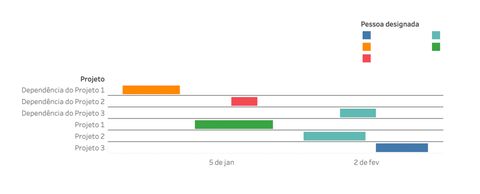
The length of the bars serves to represent the scope of each task and their placement on the graph represents the schedule, this is a super simple way to view the dependencies between tasks quickly. In addition, you can also run different workflows in parallel.
The diamonds in the graphic represent the project’s milestones. Gantt charts also usually include a vertical line to indicate the current date, so at any time you can easily understand if you’re on the right track and adjust your strategy.
Increase the productivity of your project with Wikimee!
Here at Wikimee we not only offer a place for you to work, but also a platform that elevates your productivity and helps you unleash your full potential.
Imagine a space where all the tools and resources you need are at your fingertips, intuitively organized, and accessible with just a few clicks. At Wikimee, we make that a reality. With a user-friendly interface and powerful features, you can effortlessly browse documents, collaborate with colleagues, and perform tasks efficiently.
Say goodbye to digital chaos! Our platform was designed to keep you organized and focused, following every step of each project visually and efficiently, which helps you manage your schedules and achieve the success of your projects.
Are you ready to increase your productivity, unlock your creativity, and transform the way you work? Click here and count on Wikimee. Join us and discover a new world of possibilities.
